
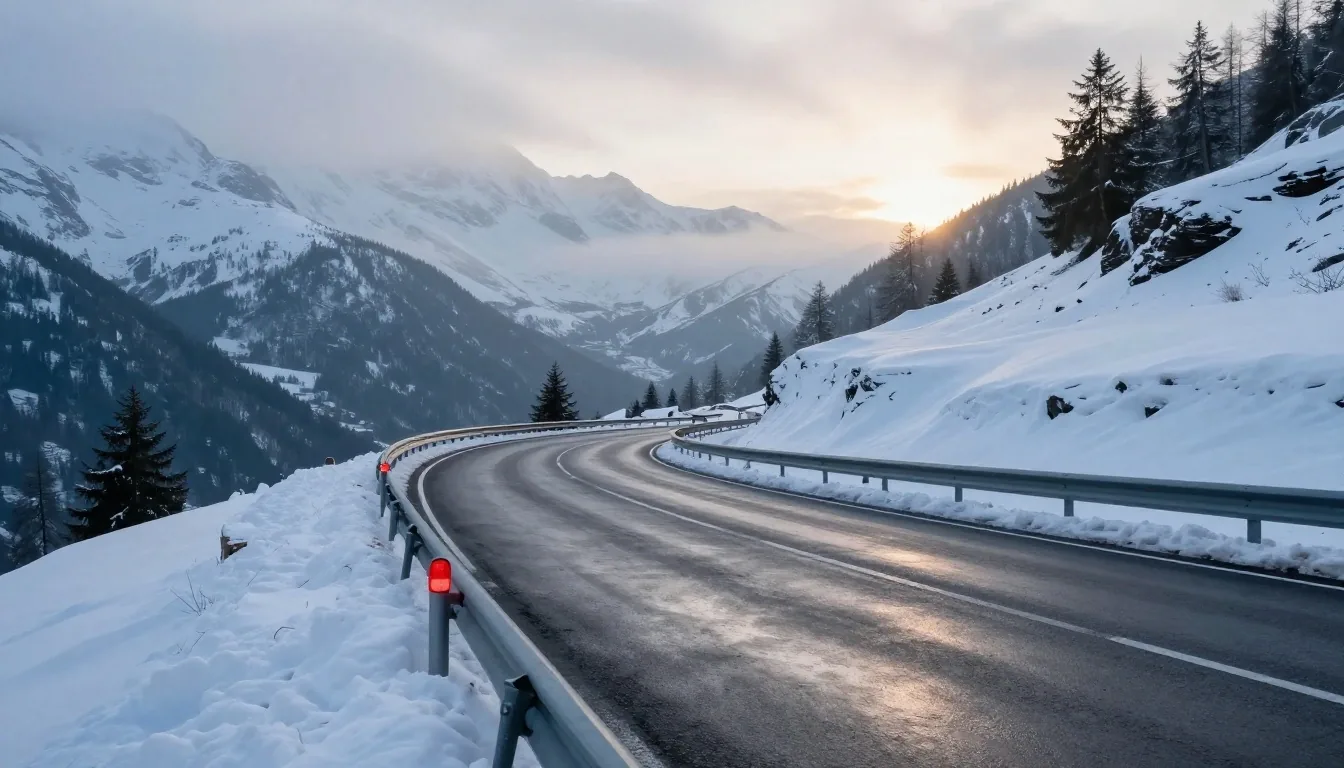
Drive safely during Austrian winter conditions and snow emergencies
Winter driving in Austria requires strict legal compliance, specialized vehicle equipment, and refined cold-weather driving techniques. When snow falls across alpine valleys, highways and mountain roads transform quickly, demanding increased stopping distances, gentle control inputs, and absolute readiness for unexpected delays.
Situative Winterreifenpflicht
Austrian federal law mandates that from November 1 through April 15, drivers of passenger cars and light commercial vehicles under 3.5 tonnes must operate with winter tires whenever winter conditions prevail on the roadway. Winter road conditions are legally defined as snow-covered surfaces, hard-packed snow, slush, or black ice. Simply mounting tires labeled M+S (Mud and Snow) is not sufficient unless they meet strict tread depth standards.
Federal seasonal obligation window under the Austrian Motor Vehicles Act (KFG).
Mandatory minimum tread depth across the entire rolling contact surface.
Required for diagonal-ply tires on older vehicles and specialty trailers.
Winter markings must be backed by true depth; summer tires with chains permitted only on uninterrupted snow.
Legal consequences of winter tire violations
Driving on summer tires during winter conditions is treated as a major traffic offense under Austrian road safety legislation. Police officers are legally empowered to impose on-the-spot roadside fines, and in cases where an unprepared vehicle blocks traffic or causes a hazard, administrative fines can reach up to 5,000 euros.
Furthermore, if you are involved in a traffic collision while operating improper tires during winter conditions, your vehicle insurance provider may refuse third-party indemnity coverage or seek full reimbursement for damages due to gross negligence.
In Austrian civil courts, if an accident occurs on winter roads while fitted with summer tires, the legal presumption assumes the inadequate tires caused or contributed to the crash unless the motorist proves otherwise.
Routine police traffic checks where summer tires are observed on winter roads without specific road disruption. Officers are authorized to demand immediate cessation of the journey until conditions clear.
Applied when an unequipped vehicle stalls on a mountain ramp, jackknifes, blocks public snow removal machinery, or induces an accident on high-capacity routes such as the A10, A12, or A13 corridors.
Comprehensive (Kasko) claims can be refused in full for gross negligence. Third-party liability insurers may pay the victim but seek full financial recovery from the at-fault driver under statutory recourse clauses.
Snow chain regulations and technical application
Under extreme snow conditions, winter tires alone may prove inadequate on steep mountain passes. Blue circular road signs displaying a tire fitted with snow chains legally require all vehicles traversing that section to mount snow chains on their driving wheels.
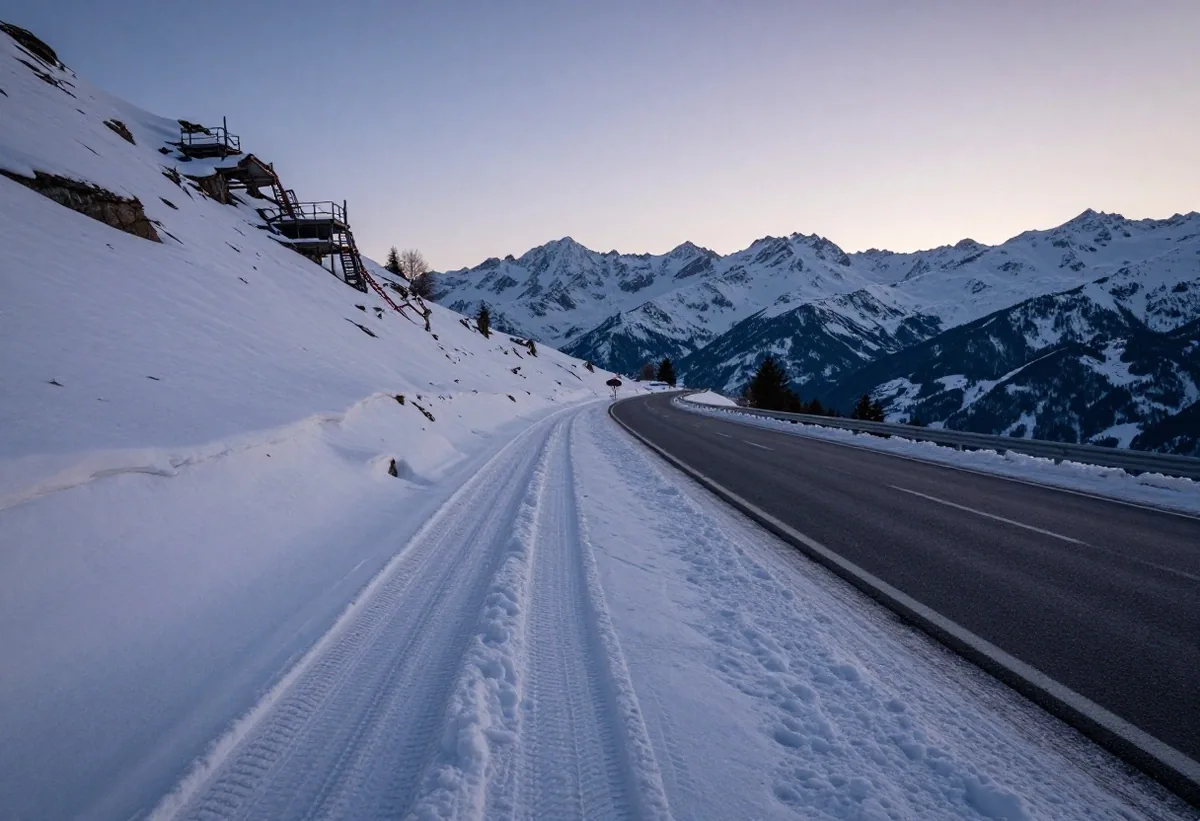
Mandatory Signage & AWD
The round blue sign with a white tire chain icon applies to all vehicles without exception. Four-wheel-drive vehicles must also comply unless an auxiliary sign explicitly states "ausgenommen Allrad" (all-wheel drive exempted).
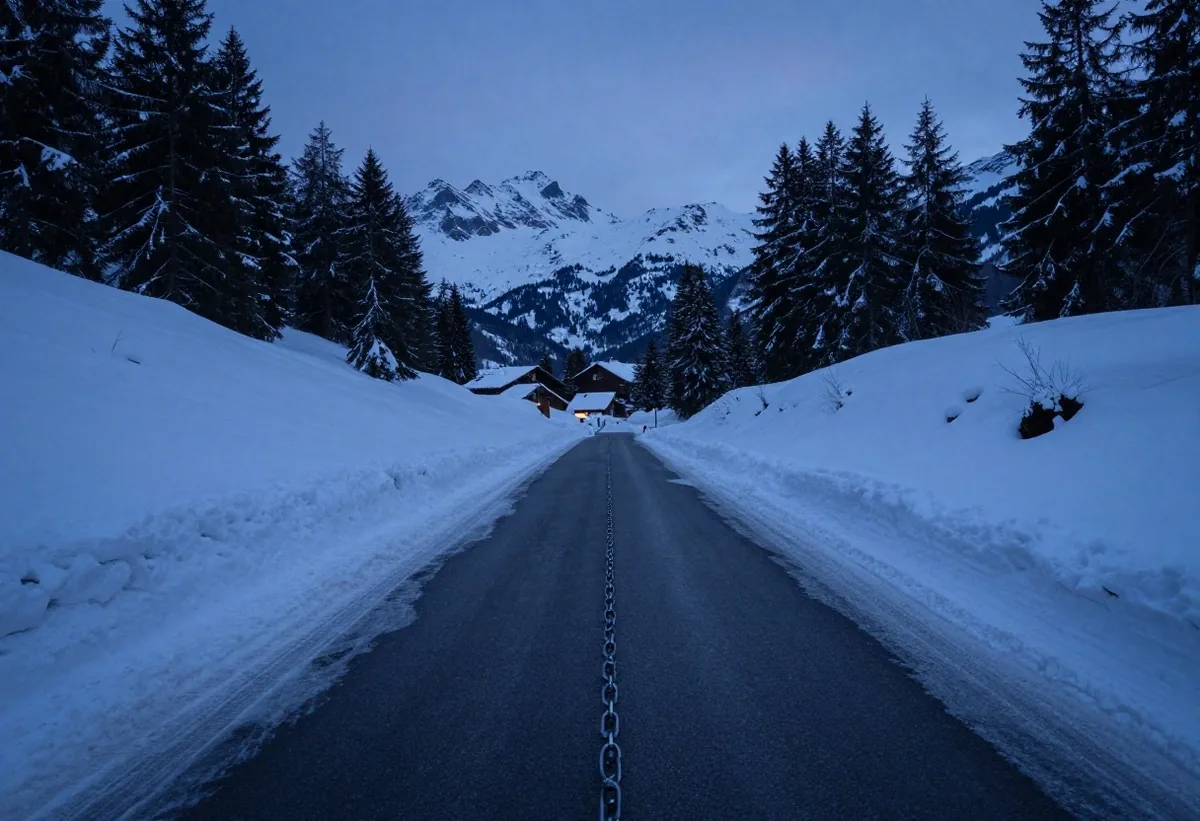
ÖNORM Certification Law
Snow chains must be certified to Austrian standards (ÖNORM V 5117 for passenger cars or ÖNORM V 5119 for commercial trucks) or hold equivalent EU certification. Temporary fabric snow socks are generally not accepted as legal substitutes.
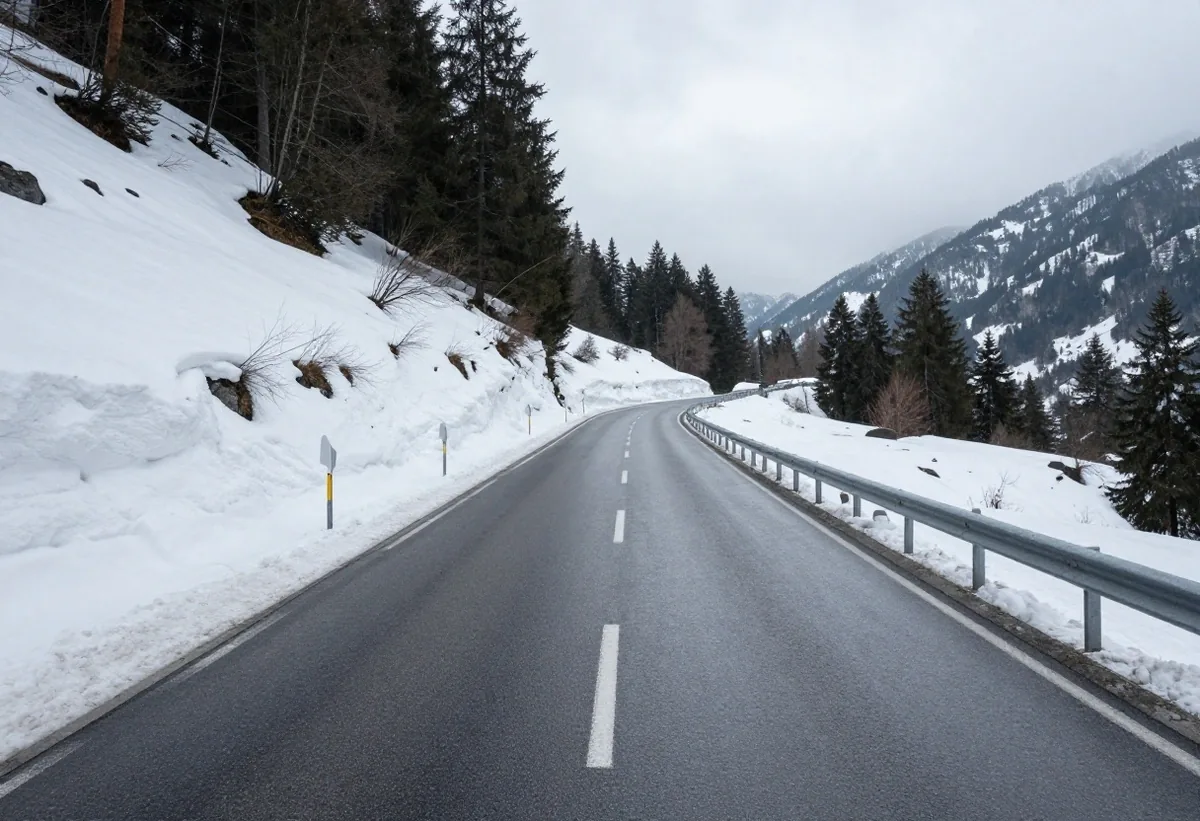
Operational Limits & Speed
When snow chains are mounted, vehicle speed is legally limited to 50 km/h (or lower if specified by chain manufacturer instructions). Chains must be fitted on dedicated turnouts (Kettenanlegeplatz) before starting steep ascents.
Emergency corridor rules (Rettungsgasse) on winter highways
Whenever traffic begins to slow down or stall on Austrian Autobahnen or Schnellstraßen, drivers are legally required to establish an emergency corridor (Rettungsgasse) before the vehicle comes to a complete standstill. This open corridor allows emergency services, snowplows, and breakdown recovery vehicles to reach accident scenes rapidly.
On dual-lane highways, vehicles in the left lane steer as close as possible to the left guardrail, while vehicles in the right lane move to the far right, utilizing the emergency shoulder if necessary. Failing to form a Rettungsgasse or illegally driving along an open corridor results in heavy penalties.
Left lane shifts far left; right lane shifts far right over the breakdown line.
Left lane alone moves left; all middle and right lanes steer towards the right.
-
Failure to form corridor: Up to €726 fine during standard traffic back-ups.
-
Corridor obstruction: Blocking emergency vehicles or snowplows carries penalties up to €2,180.
-
Unauthorized transit: Driving behind emergency vehicles in the corridor results in immediate administrative prosecution.
Dynamic speed limits and the IG-L environmental framework
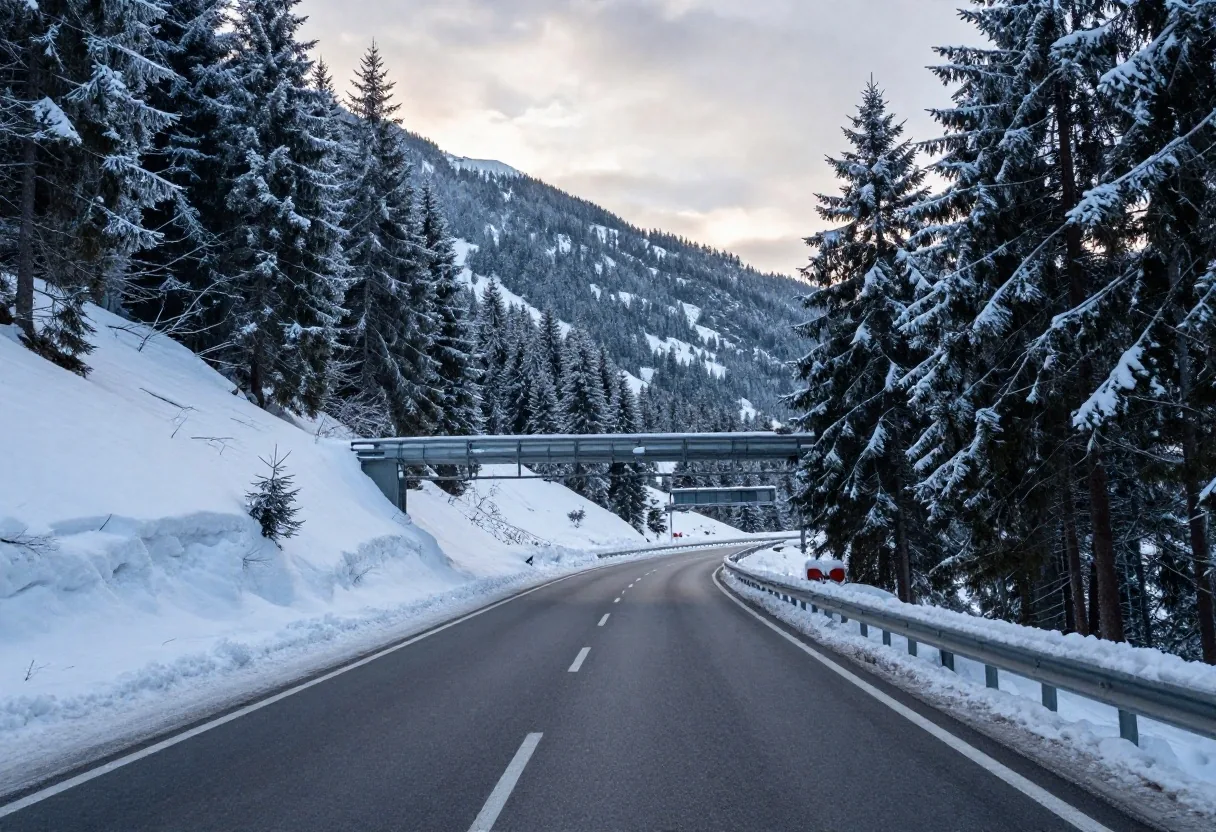
Winter driving across western Austria frequently brings reduced speed limits under the Immissionsschutzgesetz-Luft (IG-L), designed to curb air pollution trapped in deep mountain valleys during cold weather temperature inversions. Overhead matrix displays along the A12 Inntal Autobahn and A10 Tauern Autobahn frequently drop the legal maximum speed from 130 km/h to 100 km/h or 80 km/h.
Exceeding an IG-L speed limit incurs standard speeding penalties combined with environmental administrative surcharges that significantly increase the total fine. Pure electric vehicles with Austrian green registration plates may enjoy exemptions where explicitly marked by auxiliary signs; foreign EV drivers must review local corridor rules carefully.
Vehicle preparation and essential winter equipment
Before embarking on an Austrian winter journey, equip your vehicle with essential cold-weather supplies. Always carry a sturdy ice scraper, a soft snow brush to clear windows, lights, and roof snowloads, and low-temperature windshield washer fluid rated to at least -25°C.
Full Roof Clearing
Clearing only a small peephole on your windshield before driving is illegal and carries immediate roadside citations for driving with obstructed vision. Roof snow masses that slide over windshields during braking pose grave safety hazards.
-25°C Washer Fluid
High-speed spray nozzles freeze instantly without concentrated antifreeze fluid. Road salt spray on Austrian motorways forms an opaque white film that blinds drivers within seconds if washer jets fail.
Safety Vests per Seat
Austrian law requires an EN ISO 20471 approved high-visibility safety vest for every passenger. Vests must be stored inside the cabin—never in the boot—so they are donned before stepping onto highway shoulders.
Cabin Emergency Pack
Keep insulated work gloves, a functioning headlamp or flashlight, a warm wool blanket, and drinking water inside the passenger cabin. Severe pass closures can trap vehicles in sub-zero cold for multiple hours.
Driving techniques on snow, slush, and black ice
Driving safely on alpine winter roads requires smooth, deliberate control inputs. Accelerate gently to maintain traction, and increase your following distance to at least four times the standard dry-weather spacing.
When descending steep snowy grades, engage a low gear to allow engine braking to manage vehicle speed, minimizing reliance on the footbrake. If your vehicle begins to skid on black ice, dip the clutch (or keep your foot off the accelerator in an automatic), look in the direction you want to travel, and steer gently into the skid without erratic overcorrection.
Extended Following Gap
Stopping distances on hard-packed snow are triple those on wet asphalt, and up to nine times longer on black ice. Expand the standard 2-second rule to at least 6 to 8 seconds on mountain corridors.
Transmission Engine Braking
Prolonged braking on alpine descents causes brake fade and wheel lockup. Downshift manually (including on paddle-shift automatics) to 2nd or 3rd gear to harness natural powertrain deceleration.
Smooth Steering Arcs
Abrupt turn-in breaks front tire friction instantly. Initiate cornering with progressive hand movements, allowing tire tread sipes to bite into packed snow crystals rather than scrubbing across them.
Electronic Stability Protocol
Keep Electronic Stability Control (ESC/ESP) enabled during transit. Only temporarily disengage traction control when rocking a vehicle out of deep stationary drifts at starting speed.
Tunnel transitions and black ice hazards
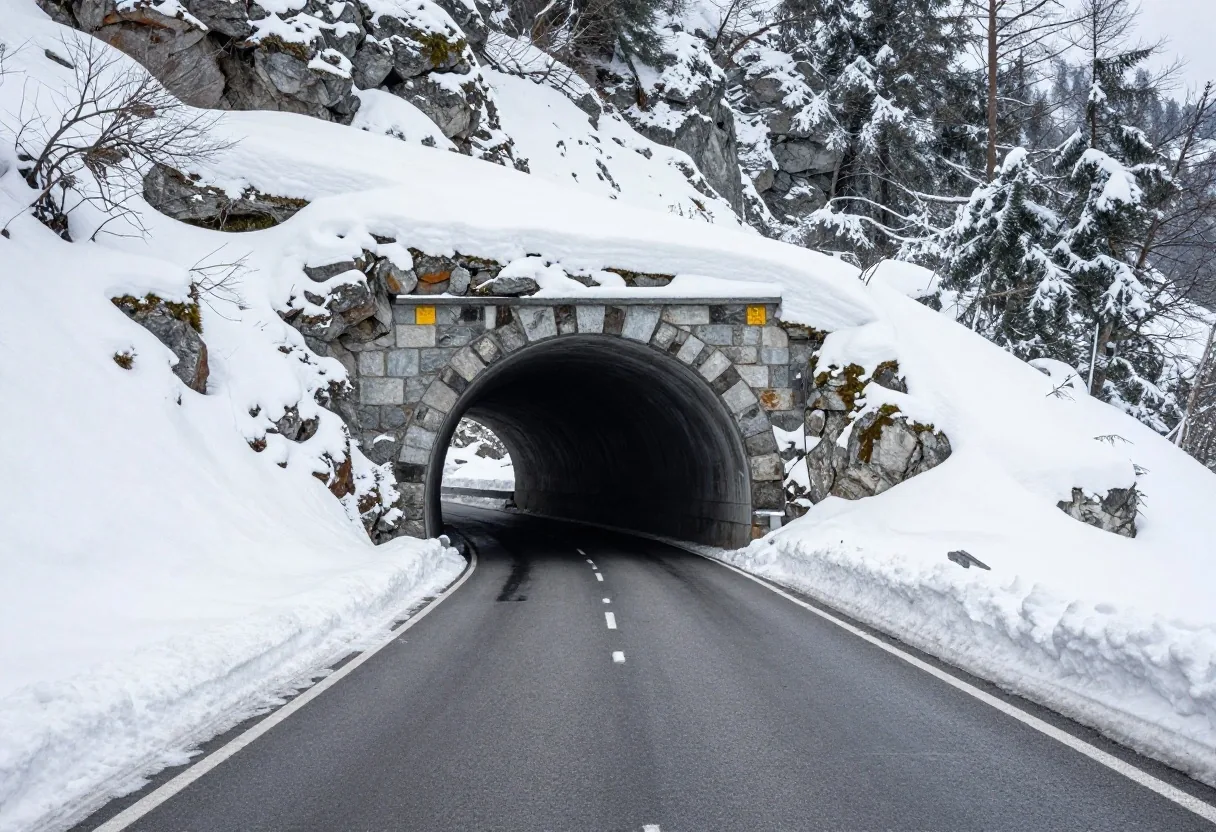
Tunnels present deceptive safety hazards during winter. While the interior of a long tunnel like the Arlberg or Tauern remains dry and above freezing, road surfaces immediately preceding and exiting tunnel portals are prime locations for black ice.
As warm, moist air carried by vehicles exits the tunnel mouth, it condenses and flash-freezes against freezing external bridge spans and road cuts. Always reduce your speed before exiting highway tunnels, and anticipate sudden crosswinds and slick asphalt.
Bridge Deck Warning: Mountain viaducts possess no ground thermal mass. Cold air circulating beneath concrete bridge girders causes road surfaces to freeze well before ground-level highway cuts.
Breakdown protocols in sub-zero alpine conditions
If your vehicle suffers a mechanical breakdown or puncture on an Austrian highway during winter, pull as far onto the right emergency shoulder as possible and activate your hazard warning flashers. Every occupant must put on an approved high-visibility reflective safety vest inside the vehicle before stepping onto the road.
Shoulder & Hazard Lights
Steer onto the far right breakdown shoulder or refuge niche (Pannenbucht). Switch on emergency flashers immediately to alert following snowplows and vehicles.
Vests Before Egress
All passengers don safety vests before opening doors. Exit exclusively through right-side passenger doors away from active highway traffic lanes.
Warning Triangle
Walk behind the steel crash barrier. Erect your warning triangle at least 150 meters (200 meters on high-speed motorways) upstream of the disabled car.
Roadside Dispatch
Wait safely behind the barrier on the raised embankment. Contact nationwide roadside assistance: ÖAMTC at 120 or ARBÖ at 123.
Heavy snowfalls and mountain pass closures
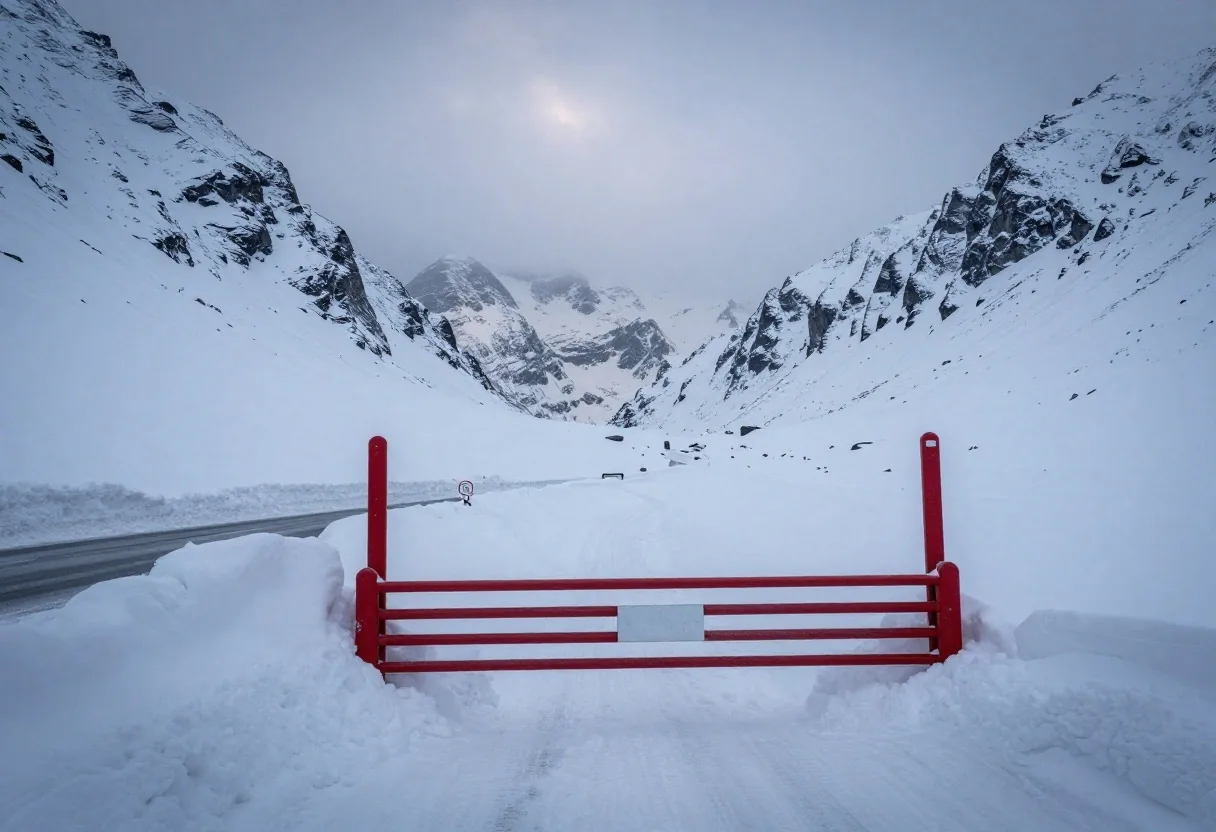
During severe blizzards, alpine avalanche commissions (Lawinenkommissionen) assess snowpack stability on mountain faces above major highways. When avalanche risks rise to critical levels, authorities initiate preventative road closures or conduct controlled artillery blasting.
When highway barriers lower across valley roads, do not attempt to bypass warning gates or red flashing lights. Find a warm roadside resting spot, monitor local traffic radio on hitradio Ö3 (99.9 FM across most alpine regions), and wait until municipal snow clearance crews reopen the route.
Frequently asked questions on Austrian winter rules
Are all-season tires (Ganzjahresreifen) legally permitted in Austria during winter?
Can I use studded tires (Spikereifen) on Austrian motorways?
What happens if I encounter the blue snow chain sign without chains in my vehicle?
Does the Situative Winterreifenpflicht apply when the road is completely dry in December?
Are snow socks (fabric traction aids) legally recognized in Austria?
Prepare your alpine route before winter weather sets in
Review seasonal corridor open status, mandatory toll sections, and live digital vignette planning across the entire Austrian road network.